Marvel Merchandise
Today, Marvel is, alongside DC, the largest and most important comic book publisher in the world, as well as the origin of one of the most successful film series of all time: the MCU. The comic publisher emerged from Timely Publications, founded in 1939 by Martin Goodman. Two years later, the publisher of comics and dime novels became Timely Comics. Several of the Marvel heroes popular today were already part of the publisher's repertoire back then, such as the Human Torch, who would later be one of the Fantastic Four, and above all Captain America, who enjoyed great popularity among patriotic Americans and served as an important propaganda tool during the war, not just in the comic plots but in the real world as well. Artist Jack Kirby even had Cap beating up Hitler on the cover of his very first solo issue in 1941. Icon Stan Lee was also part of the publisher's writing team back then.
A New Era
The McCarthy era, with its reactionary worldview and its almost fascist approach toward anything that did not conform to that worldview, was a tough time for comics. There was even a dedicated censorship authority, the Comics Code Authority, intended to prevent the harmful influence of comics on children.
Superheroes did not experience their renaissance until the 1960s, and in 1961, Timely Comics was renamed Marvel Comics. It actually started with Lee and Kirby's Fantastic Four, but many of the heroes so popular today soon followed, such as Iron Man, Spider-Man, Doctor Strange, Ant-Man, Daredevil, Hulk, Thor, and Nick Fury. The Avengers also made their first appearance during this time, albeit not with the original lineup we know from the cinema. Furthermore, this was the birth of the X-Men, which were intended as an allegory for the racism faced by Black people in the USA.
Since the 1970s were a rather poor time for superheroes, the publisher focused primarily on horror comics during that era. In 1978, Jim Shooter became editor-in-chief of the Marvel publishing house and reformed it. He was the one who introduced the big crossover events, which at the time were intended to encourage the purchase of more issues and did not reach their true heyday until 2005, but have since become the secret to the success of the Marvel films.
The 1980s began with grittier comics and ended with truly dark times for the Marvel publisher. In 1988, Ronald Perelman bought the company and then practically drove it into ruin during the comic book speculation bubble of the early 1990s. But through a few bold risks, the publisher was able to recover once more. This period also saw the sale of film rights to several popular Marvel heroes, which is why the MCU could not use them when it launched in 2008 with Iron Man.
The First Captain America Film
There had been film adaptations of Marvel comics before. A first Captain America film appeared as early as 1944. In the late 1970s, there was even a first wave of Marvel adaptations: Spider-Man (1977), The Incredible Hulk (1977), Dr. Strange (1978), Spider-Man Strikes Back (1978), Captain America (1979), Captain America II: Death Too Soon (1979), and Spider-Man: The Dragon's Challenge (1981). The fact that we don't remember any of these TV movies speaks volumes. Only the adaptations of Conan the Barbarian really remained in our memory. There were other TV movies featuring the Hulk, and in 1990, another Captain America. The low point was likely 1994's The Fantastic Four, which was only produced to retain the film rights purchased by Bernd Eichinger (sounds familiar, doesn't it?) and was so bad that Constantin Film never released it.
In 2000, X-Men provided the first glimmer of hope regarding the adaptation of classic Marvel heroes. The emphasis here is on "classic," as we certainly haven't forgotten Blade and the Men in Black. However, we have wisely suppressed the memory of David Hasselhoff as Nick Fury. 2002 saw the first Spidey film with Tobey Maguire. While X-Men and your friendly neighborhood spider did quite well on the big screen, there were still some admitted flops, such as Daredevil with Ben Affleck, Hulk, and the two arguably slightly better Fantastic Four films.
The Beginning of the MCU
But in 2008, it was decided that Marvel Studios would take matters into their own hands, and they reached for a superhero who was still considered B-list material at the time: Iron Man. Unimaginable to us today, but it proves how much film & TV have shaped our view of the great comic heroes in recent years. In 2009, Disney then bought the whole shebang and led the MCU to its current size. Yes, we would have liked to see something similar happen with Star Wars. Through a deal with Sony, Spidey was later able to return home to the MCU. Disney acquired the rights to the Fantastic Four and the X-Men with the purchase of Fox. Yes, whenever a studio is up for sale, Disney is like General Grievous: "This will make a fine addition to my collection."
Well, here we are now after over 10 years of the MCU. For nerds and geeks, it is a true blessing that superhero comics have finally made their way out of the niche where they languished for so long—at least here in Germany—and into the mainstream. For film buffs and series junkies, the MCU, which spreads in the form of films & series, is also a pure joy. After all, an entire cinematic universe is an interesting new concept that has since triggered many, though often pathetically failed, attempts at imitation.
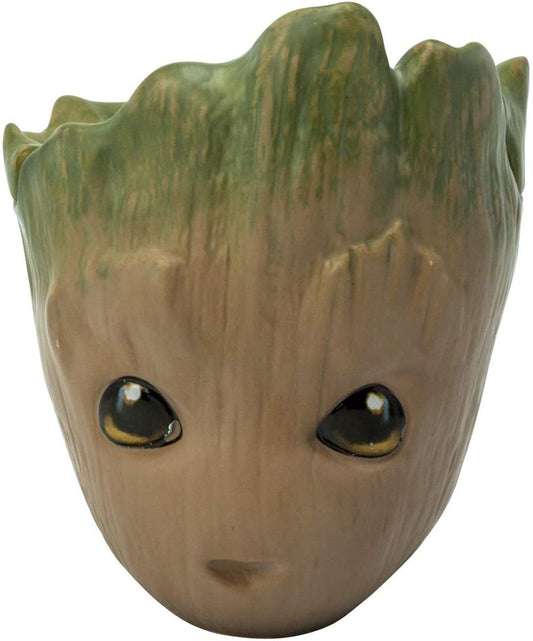
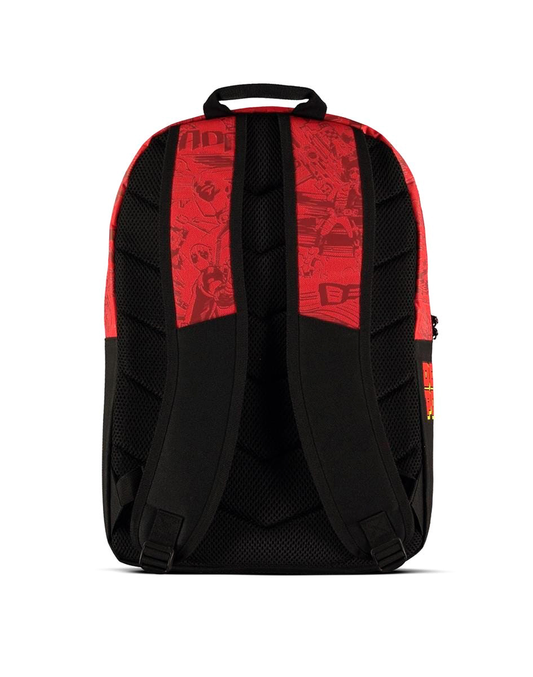
Naturally, a film series as successful as the MCU is also well-represented on the merch front. Here at the yvolve shop, every popular character from the MCU and the comics gets their own little online shop for all sorts of fan merchandise. The range of merchandise is as diverse as the Marvel universe. Clothing and fashion accessories featuring the faces of your favorite Marvel heroes? Perhaps t-shirts with Black Widow and Deadpool? Or Cap's image on a cap? Or would you prefer a poster of the Guardians of the Galaxy, who are basically just a bunch of idiots standing around in a circle? Our range of merch also includes mugs, lamps, bags, and notebooks. Here you can find nice decor for your own home and gifts for fellow Marvel fans. But choose carefully—we don't want a second Civil War.